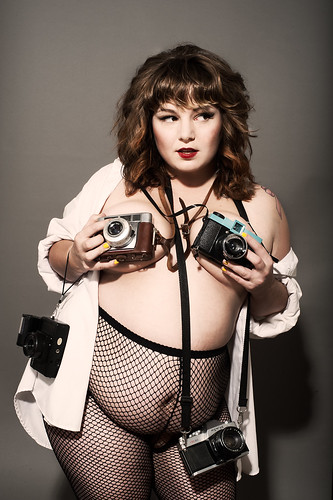
Wednesday, October 15, 2014

A critique of transphobic supposedly unbiased rhetoric


So this afternoon I read Michelle Goldberg's What Is A Woman: the dispute between radical feminism and transgenderism.

Not pictured: all of the fucks I tried not to give but ended up surrendering anyway
It absolutely reminded me of reading Ariel Levy's Female Chauvinist Pigs two years ago.

Both styles of writing employ the self same "subtle" tactics that make their biases seem more legitimate/natural without actually stating those biases. As a fan of bias-disclosure this bugs me.

For instance, Goldberg gives specific visual and physical detail to the majority of the radical feminists she quotes or shortly profiles. The trans advocates who's voices she leans on are afforded little of these humanizing characteristics. The only trans people who get detailed descriptions are either throwing their support behind radical feminist or have decided to de-transition.

This schism in representation is particularly clear when she profiles the rightfully identified "Abusive posts [proliferated] on Twitter and Tumblr" made by allegedly trans activists. None of those "trans activists" are humanized with physical description. Goldberg mentions a photographic threat but chooses to focus on the knife in the photo rather than the person holding it.

In the very next sentences we're given a friendly amount of context about Lierre Keith. She has a name, an outfit, a well described hairdo, and we get to know what she does for a living. Only after all of that personal information does Goldberg obfuscatingly say that the activist group Keith is a part of: "D.G.R. is defiantly militant, refusing to condemn the use of violence in the service of its goals."

Consider the visceral difference a you as a reader feel when reading an actual threat in contrast to the feeling you get form reading the distanced language with which Goldberg describes the unspecified "violence" condoned by D.G.R. For me this exposes a bias in the writer's own notions. It shows me who she is willing to grant leeway and give the benefit of her doubt. It shows me that she considers some violence to be worse than others. Now I don't know if this bias in her language is done intentionally or not (though with Levy I assumed it was unintentional).

But in the craft of fiction this is how you set your readers up for a polarization. It's how you create  Good Guys and Bad Guys. The Good Guys get detailed and compassionate descriptions and yes, sometimes do vague sorts of violence to the Bad Guys for the "greater good". The Bad Guys are usually only shown in the graphic throes of committing violence with no additional context.

In this article acts of violence are associated with both radical feminists and with trans activists. However the polarizing presentation of that information drastically changes the way the reader will receive and process that information. This article is not designed to humanize trans people or trans activists. And it's more than just the polarizing way she (refuses to) characterize/s trans activists. In the third paragraph of her article she makes the misstep that dooms any possibility of trans people and their experiences being validated by her writing.

She states: "Trans women say that they are women because they feel female--that, as some put it, they have women's brains in men's bodies."

Not only is this an excruciatingly basic reduction of the experience most trans people have, it's erases trans women before the piece has really begun. This erasure may not seem entirely evident to non-language nerds.

Let me show you what I mean:
Trans women don't "feel like women". They ARE women. Reducing someone else's explicitly stated experience as what they "feel like" shows a huge distrust of that person's reality.

Think about it this way:
Say you had a headache or a medical condition, and you said to a friend who you were supposed to meet for lunch that you couldn't make it because of the uncomfortable reality of your health was preventing you from attending. And then imagine this friend, instead of trusting that the pain you felt is real simply said "I guess if that is how you feel." and hung up.

Instead of just nodding and accepting it as true when a trans person tells her, Goldberg responds condescendingly with "well if that's the way you feel". It's rude. It shows that Goldberg does not trust even the explicitly stated experiences of trans people.

Yes it acknowledges those experiences. But it degrades them categorically. It marks those experiences as impossible to exist as a shared reality. Because if it's a feeling someone else has, then you don't have to accept it or feel it too I guess.

This distrust and assumed falseness is echoed in Goldberg's use of the world "transgenderism" throughout the entire piece. As if the identities of entire swathes of people under the trans* umbrella were just some -ism. Ism, which google delightfully defines as "a distinctive practice, system, or philosophy, typically a political ideology or an artistic movement." In other words a lifestyle.

Being transgender is not a fucking "lifestyle". Correct me if I am wrong, but wasn't it common 20 years ago to hear homophobic people talk disparagingly about lesbianISM and the "gay
lifestyle" (okay okay I know people still do this but I live in a queer Mecca). To me reducing transgender folks and there experiences to the realm of an -ism is really just an echo of the rhetoric that straight people use(d) to ostracized and delegitimize gay and lesbian people.

Much as I would love to I won't go into refuting the many and mostly flawed or anecdotal points Goldberg tries to pass off as evidence that TERFs are in fact being persecuted by trans people. Others have done so already. And I believe my views on the exclusion of trans women from radical feminist spaces has been clearly stated (summary: it's complicatedly wrong).

This post was an examination of how Goldberg's biases seeped (or perhaps were intentionally leaked) into the craft and style elements of this article.


Tuesday, October 14, 2014

Book Club Excuse

Five months ago I read this awesome book:

And due to poor scheduling on my part I forgot that tonight I am going to a queer theory book club to hear what other people thought about it. I'd love to write you up a post about all my thoughts on this book, but the truth is I haven't the time and I honestly don't remember too much about what happened in May.

But I will leave you with this nugget I thought pithy enough to capture:


As you can see it leans a bunch on post-structuralism. But I remember also loving that Wilchins recognizes the Western lens they and most of the book's readers will be obliged to think about gender.

Anyway. I'm hoping to get home brimming with new ideas and a blogpost ready to go. But on the off (and actually pretty likely) chance that I get home just plain exhausted, you have my apologies. This is all the post you get today.

Monday, October 13, 2014

My Commute (a prose poem for my bike)

This is how I get to and from work every day (and also anywhere else I need to get to). I'm pretty sure I have the best commute ever.


Even after 8 hours of anxious rolling to and fro, the soles of my feet are overjoyed to be gripped and my sneakers grin at being bitten into by the pedal's teeth. For the first few blocks my palms and fingers squeeze hard to the handlebars. As if I could somehow milk relief from the yellow leather bar tape (last month's big spend). But less than a mile of my hip socket and knees churning, my spine collects enough courage to straighten up. Little by little until my hands let go and allow themselves to be dragged heavily to my sides, as roll roll roll my shoulders to the music I pinned under my helmet straps and into one ear.

Between the road cracks I dance or even flap my arms like some goofy fucking bird, or one of those pre-flight humans who knew nothing about aeronautical engineering. There is something so freeing about being on a bike. My fixie delivers to me a false and deliciously flattering sense of control. As I turn my hips and inner thighs into a steering wheel and belt out Lady Gaga, I do not fear onlookers. I welcome their gawking, because right now I am awesome-- and not in the 90's Tony Hawk sort of way. A classic sense of awe streams through my biking bones. And I become bold. Consider proposing a drag race with one of the cars. I envision winning and riding off with the stunned motorist's girlfriend bouncing on my handlebars; her heart clearly the wager of the race he was foolish enough to agree to.

I flirt with every pair of eyes I can catch. It takes serious effort to unpurse my lips from the wolf whistling position. Instead I shake my dance more vigorous. Grooving on my bike, I am sex on wheels. And in this state of churning catharsis I am freed. I am dangerous. I trickle my calculated risk through red lights and past the stilled and grumbling chagrin of jealous drivers.

I am naive enough that I do, for a few blocks, actually feel immortal, that if anything came close to hurting me and Queen Bee we'd just glide free from the damn pavement. Like I had a fucking alien hiding under a blanket in my front basket or something. Up on my revolving perch, this thing, this cycle combining with my body is stronger and surer than any drug I have ever taken. My lungs open like wings waiting for action and I am free as the air that moves through them.

Sunday, October 12, 2014

Breakfast sensations (short sweet)

I stuck my tongue into the bottom of the nearly empty syrup ramekin and let the sweet meet my thoughts. It was pleasing. The exceptionally bright and heated morning made it a chore to walk on the unshaded part of the sidewalk. But we walked there anyways.

We met our friends for breakfast. They'd just returned from Ohio after two weeks of waiting for a family elder to finally succumb the whatever the hospital told them as the matter. And I don't want to talk too long about intimate suffering that doesn't belong to me. But it was good to see friends again.

I've been battling a fickle fever since Thursday and the oatmeal in my bowl is about all I can handle. I make conversation as best as I can and try to remind myself that just being there, that is a big deal. I don't have to be witty to be enough. I miss my friends and I am glad they are back in town again. And I don't have to be entertaining to deserve this life.

Saturday, October 11, 2014

Movie review: The Hundred Foot Journey


This film was adorable. Deliciously fluffy. The best features of this movie are of course the food but also the way it glorifies the Taste Face. If you are a person who likes to watch other people experience pure joy and epiphany then you would probably like this movie. I enjoyed it thoroughly. It made me miss my family.

Now that said, the entire premise of the main character Hassan's progress is slightly irksome to me. He supposedly has this magical Stuff which makes him innately, some sort of genius chef (who can cook you into orgasm even with badly burned and bandaged hands). Most of you who know me or read my words on the the regular already know that I dislike the entire construct of the genius and consider how we romanticism overnight success extremely unhealthy. So the whole "he's got the right stuff and I can taste it" crap kinda bothered me. And I, like Hassan's love interest Marguerite, had to keep fighting to get over my knowledge about what a crock the idea of "natural genius" is.

When I could get over the hokey of that premise, this movie's visuals and style of storytelling hit my nostalgia bones in a good way. The dialogue is almost slapstick, but it has a very classic american-ideal-of-paris quality to it. It reminded me of Sabrina (the 1954 version, not the 1995 disaster) and a few of the other rom coms of the period that I watched when I went through my teenage obsession with Audrey Hepburn. There was a simple and naive sort of passion to this film and all of its characters' motivations.

Granted some of this romanticism comes from the exotificaiton of cultures that are considered "other". And yeah, I know, this film does plenty of work to put equally degrading dialogue into the mouths of both races represented here. But come on. Equal opportunity insults are no substitute for honest depictions of the awkward and subtle way that tension builds up between people of different backgrounds and cultures. Especially when there's a history of oppression and skewed power dynamics there.

With easily identifiable rights and wrongs, and extremely few supporting characters. The friction portrayed is overly simplistic. It is the story book version of cultural exchange and tolerance. At best this can give the message that cooperative and joyful exchange between cultures is possible and beneficial. At worst we get an endorsement of the "melting pot" mythology that has and continues to erase the heritage of those with less privilege (read here the nonwhite and nonwestern).

It's upsetting but unsurprising that The Hundred Foot Journey never even makes a real attempt at addressing the historical contexts of power and oppression would effect the relationships that these characters have. There is an almost satirically comical portrayal of the way racism affects the main character and his family members. But I am glad that this element of being immigrants without community is at least hinted at.

The thing I was most disappointed by was the romantic story line of the main character and another chef. Now I don't want to spoil anything, but the lack of communication between them and odd treatment of the boundaries of their relationship left me in question about the kind of character Marguerite actually was. And I suspect her character development was sacked for a happy coupling that such uplifting films seem to require I guess. Oh well, another female character's complexity sacrificed to the protagonist's development.

But it was still very fun. Also most of the story is given away on the trailer, so um, you don't really neeeeeeed to watch it. I recommend having foodstuffs nearby when you see it.

Friday, October 10, 2014

Sick day: a body of jumbled thoguhts

I started feeling sick yesterday afternoon and gave myself a nap and a much longer amount of time than usual to put together and post my essay. And it's only gotten worse. It's been a challenge to convince myself to eat a decent amount of calories.

I do not love my body today. I have trouble loving my body when there is wailing ache in my tendons and when the pain between my ears is so loud and makes concentration impossible. I hate the pain but the pain is also part of my body. The messages my brain is reading as pain are parts of me.  And I sure as hell don't love them right now.

As someone who's dealt with chronic illness, who experiences gender dysphoria on the regular, and someone in a community of people who often take steps to change their appearance and bodies to reflect their identities, I take serious issue with some of the simplified and often heavily gendered sentiments of body positivity.


Nobody feels beautiful and content with their body all of the time. Life, our own unique brains, and mostly our toxic culture has made "loving yourself" a task that is uniquely difficult for everyone. Meaning yeah, it is harder for some of us.

The oversimplified directive of "love your body" can be excruciating to someone who is dreaming of, intending to, in the process of, or has gone through a physical transition process. As well as for people who are feeling sick or ill.  As with many things, when we attempt to simplify, package, and universalize it, body positivity can get twisted, exclusive, and misleading pretty fast.

This is a very similar process to the cultural awarenesses of LGBTQ experiences. In the sense that many people who aren't LGBTQ think of "coming out" as a simple one time easy task, when it is in fact a very long, involved, and individualized process. "Loving yourself" is absolutely as complex as that. It is a process not a single accomplishment. And not one that everybody has the same resources to endure.

It can be a denial of someone else's pain to demand that they love themselves. If I get hives, or have just been catcalled, or think no one will ever see me as a boy, I am not going to be able to "love the skin I am in."

It's hard and it kinda hurts to do it but I try accept people's feelings about their bodies. Because those feelings are real (even if they conflict with the way I perceive/know reality to be). One of the hardest compassionate things to do it to just be with someone when they are feeling awful and not try to make them feel better or "fix" their way of thinking. Even if what they're thinking about themselves is problematic and even harmful it's not something anyone else but them has the power to change.

Now this is not a wholesale condemnation of body positivity by a very long shot. I love it as a movement and I love that it challenges people to have healthier thoughts about and relationships with their bodies. I love that it's changing and complicating the balance of images and messages we're taught about our bodies.  I just want us to be vigilant, and handle everyone like they are each the unique individuals they are. Which means a simple slogan that works for some ain't gonna cut it for everyone.

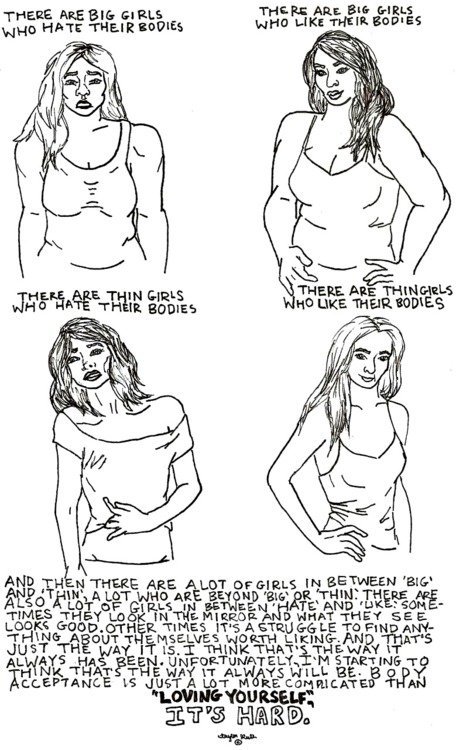
I'd written most of this post before realizing someone else made a comic that did all the work already:


Thursday, October 9, 2014

Thinness and Gender Fluidity: breaking androgyny's rules (WITH SELFIES!)


I asked this question last night after another friend of mine asked facebook who was the most high-profile non-bianry/agender/genderqueer person.

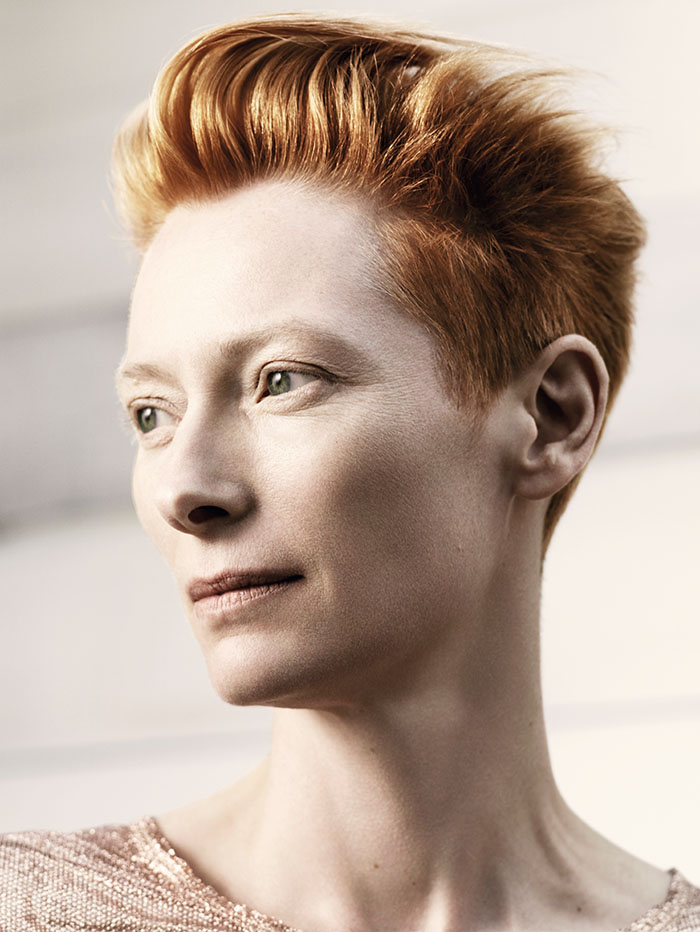
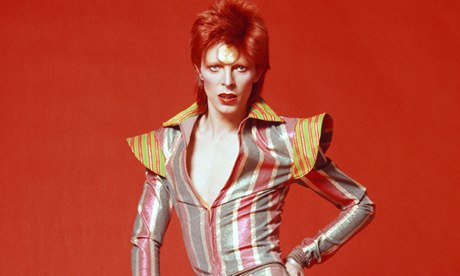
I asked this question because all the people I thought of as symbols in terms of my ideals for gender bending are all pretty thin. 


Lack of symbols has been a serious problem for gender minorities for pretty much all of modern western/white history. Fortunately and finally trans folks are showing up in media outlets. Not in droves, but in high enough numbers that gender minorities now have at least some known individuals to identify themselves with and see as role models.

The problem of invisibility for gender minorities is slowly but successfully being resolved. The hitch for me though is that, as a conspicuously not-thin genderqueer person, I have can't find any modern role models who look like me. It's often a tough sort of work to feel comfortable loving my own body. And I think this is part of why.

The images of these gender benders, which I am endlessly thankful for in so many way, transmit to me (along with many other valuable things!) two very harsh messages about gender nonconforming:
  1. In order to be visible to others as androgynous/genderqueer one must be thin. 
  2. The masculine must always be given more prominence, and physically feminine qualities (like curves) should be played down or not there at all. Femininity is best expressed through makeup or outfit choices and not though the body or facial/emotive expressions.
These are the unspoken rules of androgyny (as I receive them). They're held together by a crude mix of masculine centrism and fat phobia

For me these rules mean that my hips, breasts, and butt should be either insubstantial or easily hidden. Which they aren't and probably never will be. The last time I was svelte by any means was when I was 14. Then the estrogen fairy visited me. It's taken me a while to get here, but today I love the curvier parts of my body. I love they way they look and feel.

But this love is brought into a false challenge when I try to express my atypical gender. When I dress masculinely I feel reflexively critical of the fact that my breasts are a visible bulge under my button down and that my hips are obvious even in mens jeans. It seems wrong. It goes against the rules I learned about gender bending.

As a champion of selfies I notice this in the way that I have staged/posed photos I've taken of myself and in how I view them:

Note how in the first photo I seem somehow "less androgynous" with my butt stuck out and the very obvious curving of my body (and also the kick-ass pump)? I could be wrong but I think most people who saw that photo out of context would not assume I'm genderqueer. 

In the photo on the bottom however, because I've reduced the visibility of my breasts, butt, and hips, put on a pair of sunglasses and my best blue steel face, I more closely resemble the culturally accepted idea of gender bending.

Now. I like both of these photos. But honestly I feel the one on the top to be more expressive of me. The sunglasses do play some part in that, but mostly it's because there's a playfulness to the first photo that's missing from the second one. When I look at the one on the bottom I think to myself with a chuckle "geez that guy takes himself way too seriously." I find the masculinity a bit (comically) over the top. But I posed that way because it was fun to try on and also because that is how I have seen androgyny/gender bending portrayed. 

Note the fact that I've posed and framed the second shot in a way that makes me appear thinner and taller and that in the first shot you can see much more of my body and have a sense of its actual size. My hips don't lie. It's the skewed representation and people's subsequent assumptions about gender bending that lie to them about my hips.

So enough with fun and games and selfies:

I'm really starting to hate these rules of androgyny/gender bending. I hate being the only one working to remind myself that yes, my breasts can be masculine and that yes, I can harvest a lot of manly in my big hips. It hurts that there is not room for my curvier parts within the cultural ideals of gender bending and androgyny. 

It stops people from seeing me my gender as transgressive. And I'm fairly certain it stops people from seeing me as transgender, and from getting my pronouns correct. Part of the reason I take so many damn selfies is to create evidence that me, my gender, and my body are not invisible and can all exist simultaneously. So I can see me, in all my impossible glory. 


And fuck, it's tiring being your own role model, so after some googling and with the help of those who answered the question I opened this post with here's photographic evidence of two badass and gorgeously fat genderfuckers:


Courtney Trouble is a badass                                  Gladys Bently. Just Awesome.