Showing posts with label sexuality. Show all posts

Sunday, October 5, 2014

A(n erotic) poem from the oppressor inside me

I really hate the writing advice "write what you know". I sincerely do. It stops so many people from exploring their thoughts about stuff they aren't experts in. Now I'm not saying that writing about stuff you don't know and haven't researched is going to be publishable, but it will teach you some pretty important stuff.

It will reveal all of the assumptions and bits of knowledge you already do have (but might not know that you know). Chances are that thing you're interested in learning/writing about is something
you probably have at least a few facts and assumptions about. And it's probably a good thing for any writer is to get to take stock of the knowledge base they already have (regardless of how skewed).

For instance last week I was prompted to "write a celebration of the opposite sex". I have no idea when "opposite sex" even is to me as a person who identifies as both bisexual and genderqueer. I experience a bristle of discomfort whenever I'm asked to distinguish between (two) sexes/genders.

My gender and sexual identities are in many ways inherently against that sort of defining. But some parts of are still attached to those separations. Even though they aren't the parts of me I choose to express most of the time they still exist inside of me.

So I chose to explore what I knew the least about, how my masculinity relates to the supposedly opposite feminine folks. This is what came out when I gave that space to speak:


I don't want to be just one more guy writing creepy sonnets about Women

So it's a good thing I'm awful
at sonnets, because the slow-quick,
then whiplash that any small impact
dances through breast to nipple
makes my iambs incredibly tense.

As my heart double-dactyls I
imagine our chests pressed together
the way her nipples might drag
all their implications across my storyline,
until their hard milklessness tattoos
hunger through rib to lung to liver.
The lust in me she pricked
drops sudden into hip sockets
and opens the honest horror of its being:

I love women because overwhelm is what they're used to.
I love being cast as the stimuli that she will react to.
I get off on her ceding to my protagonism,

The sashay of her ponytail's enough to
set off my engine. Her eyelids
flick faster than any lip could
transmute the notion "come and get me.
I am aching to be got."She yields
and I develop my character all over her.


The lines I wrote are both earnest and satirical. I do enjoy embodying the sort of masculinity that requires femininity to be ancillary. But I also at the very same time I recognize how very damaging, fucked up, and prevalent this dynamic is. I see how it ruins lives.

As erotic as I find these assumptions they are false. "Real women have curves" the same way real women are all reactive, submissive, and only interested in cuddling after sex. In the way that one person's experiences doesn't fit into/reflect all the stereotypes associated with their cultural group.

As damaging and confining as these roles are to people of all genders, I still enjoy them. In the same way that I cannot consciously stop my self from having a panic attack, I cannot consciously or instantly change my own desires. And I refuse to apologize for my thoughts and fantasies.

Now this whole "heart wants what is wants" bit is absolutely not an excuse/free pass to behave in ways that hurt or dehumanize others. We all experience complex and often baffling desires and we all decide how to actualize or not actualize them. I have decided to try not to dehumanize others, but that doesn't mean I'm not interested in playing out dehumanizing roles with other consenting adults.

Acknowledging that contradiction is scary. And often takes some time (and some uninhibiting substances). While writing the above poem my body and pen resisted (there's another 3 stanzas I wrote before and during drafting it that critiqued/resisted the voice I was writing from).

We like to see ourselves as Good Guys always fighting the good fight with all our thoughts and desires. But none of us really is. In this sense the revolution starts with honest self-reflection; with realizing and recognizing one's own monstrous and dehumanizing impulses.

If we let go of needing ourselves to be Good we can stop denying our problematic impulses and desires. What's revealed in this process are the deeply ingrained biases and assumptions that live in our minds.
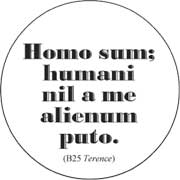

For me, seeing this disturbing information has shown me which parts of myself I choose to share universally and which impulses I chose to be more careful about expressing/exploring. Reading the words of my more vulgar impulses is important to me on several levels.

It lets me know that my desires are participating in and benefiting from the male gaze.  It also lets me know that I am not above the tantalizing effects of a power imbalance I'm on the luckier side of. It reminds me that parts of me enjoy and pine after being the oppressor.

Friday, October 26, 2012

On Performative Sexuality

Encouraged by mainstream porn narratives and in our culture overall, there is a demand for performative sexuality (or at least attraction), telling folks, and predominantly women, that their sexuality is only valuable as a display, that their sexuality is only valuable in as much as it relates to the wants of others/men.

I didn't watch/view porn until I was in my twenties And I was STILL deeply affected by the messages of performative sexuality. It's my suspicion that many American women never get to a point where they can untangle their sexuality from the now-subconscious mandates of performative sexuality.

As much good work as sex positive communities are often doing, it's not uncommon for unquestioned messages of performative sexuality to be expressed and encouraged as "radical" and "liberated". In BDSM communities women who exclusively have sex as a submissives are often endlessly congratulated & publicized regardless of the fact that the role they choose comes from a history of oppression. 

If powerplay is not practiced with an awareness of the historical and current oppressions it is invoking it is not radical. Period. It actually might come from a place of learned performative sexuality, it might come from a place of preference. But without a critical eye towards social context you can't know. I am NOT saying that folks without an education in hsitorical and systematic oppressions should be barred from BDSM. What I am saying is that the engagement, praise, and commentary of those who do understand the social & historical context for powerplay needs to be more nuanced & critical. In conversations about BDSM, bringing up historical & social contexts of oppression should be encouraged rather than just easily dismissed as "sex-negative" or "hating".

My basic beef about performative sexuality is not with those that practice it without knowing, my beef is with those who know about the context of oppression it comes from and aren't furthering the conversation. Sometimes even stopping that conversation because it's "not hot" or "uncool". Merely being an enlightened practitioner of performative/role-centered sex is not enough. It's self empowering (because you understand and are willing to dig deep into your preferences), but it doesn't educate or make space for the empowerment of others. Personal progress toward more enlightened sexuality is personalty liberating and empowering but it is not revolutionary. Learning about the complex nature of your orgasms/pleasure is good for you, but those orgasms/pleasure aren't revolutionary unless you choose to bring what you've learned about them to your community. 

By inviting & defending such criticisms I don't mean to Yuck anybody's sexual Yum. I don't disparage or look down on anybody who finds it pleasurable to be wanted or pursued. I find these things pleasurable sometimes. But if you see being wanted or pursued as your whole sexuality it makes the value of your sexuality wholly dependent on the validation others give/don't give to it. This is the risk of accepting your sexuality as merely performative (for others). 

Engaging in performative sexuality CAN be erotic and enjoyable, but we should never stop at just that! We and our sexualities are so much bigger than what others can perceive and validate. If I want a sexuality that relates with others' sexualities in sustainable & more safe ways, I first need to relate to my sexuality in sustainable, supportive, & lovingly critical ways. I try to do this and I think we all can!

For anyone (the book is geared toward women but is a great read for anyone!) who wants to join me in this I'd suggest reading Jaclyn Friedman's "What You Really Really Want." I think it's a great vehicle for women looking to define their sexuality as their own.

Also this:

"I'm not the one you want babe." because I am the person I choose to be not who you want me to be.

Wednesday, September 12, 2012

In defense of Questioning: it's the journey that matters


This post was partly inspired by this piece and a very brave (possibly questioning) daughter.

I know, I know, you, dear reader might be thinking something like “Didn't people stop using that term 1998?”, “Isn't 'questioning' for teenagers?” or “Don't we use 'queer' now?”

Well for starters I'll let you know right off the bat I do identify as queer. But I also identify as questioning. We'll have to go back a few years to show how I got to this identity. So here we go.

I've always had an urge to seek out and admit that which I do not know. I registered for advanced classes high school without taking pre-reqs. I didn't mind being confused or getting a lower grade. I was gaining exposure, asking questions that excited me. In college, while studying education I articulated a long standing thought I'd had about schools. I realized they were training students to fear failure and unknowing. Taking risks, and admitting gaps in knowledge are usually punished and rarely rewarded in traditional American education. This punishment/reward system around certainty/uncertainty has been something I've consistently resisted in my life, in and out of schools; in and out of the bedroom. Sure it's more efficient to know for certain, but I'm not always looking for efficiency.

Recently I've come to the conclusion that I'm actually uncomfortable with certainty. I avoid it. Certainty, as counterintuitive as this sounds, makes me nervous. I find unknowing, confusion, and the ritual of questioning incredibly comforting. My intuition tells me it's okay to be confused.

I often talk about being a “late bloomer” sexually. Lately I've been feeling critical of this language, not because I think it is particularly inaccurate, only that it is incomplete. As a bookish teen, I grew up in a loving, crowded family where my only real privacy was inside my skull or between pages. I remember staying up til 2 am just staring at the ceiling, reading, thinking, and imagining. I thought about things a lot, got in good cahoots with my brain. Less so with my body, I was nervously curious, but I had no space or privacy to explore this budding curiosity. There were always footsteps upstairs and you heard every movement though the thin wall between my brother's and my basement “rooms”. In the world of my family there was no such thing as a knock on the door. But more than my nervousness and lack of privacy, I, as a female teenager was taught that my sexuality was only allowed to exist in relation to men. I didn't even know women could masturbate until I was 17. What went through my head during my sparse teenage sexual experiences was something along the lines of “I guess I'll try that.”“Is this what I want?” I knew I wanted sensations but I had no idea what exactly. I was inarticulately curious.

These days things are a bit less murky. I have learned that being explicit matters not just when I share my sexuality with others but that I can have a sexuality independent of a partner and even without having a physical actualization. While things are less murky, there is so much I still don't know. In a lot of ways I am still in a place of questioning an interrogating my sexuality. And honestly, I hope to never stop that ritual of questioning.

One thing I AM beginning to feel certain about is owning my uncertainty. Regardless of the consequences. I AM still questioning. And I really mean this in the good old fashioned teenage questioning. I'd be willing to bet more people than just me identify at least their adolescent sexuality as including more questioning than they felt allowed to say at the time. But questioning is not recognized as a valid sexual state to be in. It's looked at as being inbetween, less than.

The idea of being “sexually confused” holds such a strongly negative connotation in our culture that it's often used to invalidate the actual certainty of folks expressing not-straight attractions. I find this disgusting on two levels. First of course that it seeks to define and disparage another person's experience, but secondly that “sexual confusion” is seen as a temporary or transitional state. My sexuality confuses me all the fucking time and I welcome it. I don't want that to stop. Opening to it's uncertainty is what feels natural to me.

Now, just because I am happily confused, doesn't mean I don't believe other people are exactly what they say they are. I do. I deeply respect the expressed sexual certainty of others. Hell I occasionally envy it. It takes time and energy to figure myself out all the freaking time, but it works for me. I often end up feeling like I'm behind that I have to catch up with folks more certain than myself. It's not easy to know when to chase after certainty, but like any protagonist knows, it's not the destination (certainty) that really matters, it's the journey. My journeys into that which I do not know (sexually or otherwise) make me feel like me. I am questioning.

Monday, September 3, 2012

My Big Bad Gender

This X-posted from modernpoly as part of a series of personal stories about Poly and Gender. Thanks go out to all the modernpoly folks for inspiring me to write this all down!

I became a gender non-conformist after discovering polyamory, and delighting in its demand for explicit communication about feelings and relationships. I soon adopted that level of communication in my relationship with myself; in many ways, polyamory inspired and fueled the more conscious exploration of my identity which followed. That journey eventually led to regularly choosing and redefining my gender. In this sense, I've tossed off the traditional role of “woman” that my culture has assigned me, and have been creating new ways of being a woman that I can call entirely my own.

I approach romantic relationships with the goal of staying open to possibilities of deep, flexible, and varied connections. This is also how I approach my relationship with my gender. I have a lot of traditionally “butch” qualities, but that doesn't mean I need to find “femme” in my partners or in any place outside myself. I feel lucky to have a wide range of potential partners and roles to explore, and a relationship model that demands I voice my choices explicitly. These factors create repeated opportunities to challenge false absolutes of gender: I don't just get to choose my partners explicitly and enthusiastically, I also get to choose how I present myself! I get to choose what I'll call this combination of qualities I exhibit, regardless of how it compares to others' placement on the “gender spectrum”.

Being the woman I am pushes at the boundaries of who people have leaned to call a “woman” a bit. I let my body take up all the space it wants without apology. The wide shoulders I flaunt rather than conceal make me no less girly. I don't like being called a “chick” or “bitch”. I can't stand being “baby,” and I am decidedly not a “lady”. But I am not a tomboy; Being into machines and beer and sweat does not make me one of the guys.

My clothing and behavior choices have never comfortably fit within the traditional definitions of the feminine. For now, as a feminist vagina-haver comfortable being called a “woman”, I've taken it on as my personal project to be a woman in ways that are unexpected & unapologetic. I want to make the social construct of what a woman is bigger. Not just for me (although I do like taking up space); if I can get folks to see and respect that I am a (hairy, loud, greasy) woman, maybe it'll be easier for other unconventional women to be seen and respected. To that end, I always expect that people I interact with recognize that I am what I say I am when I say it.

I am extraordinarily lucky; this usually goes over pretty well. I've never had anyone say, “Oh really?” or question my womanhood outright. This privilege has made my life as a woman much easier. But I have had men balk, disgusted at my “manly” pit hair or other 'less womanly' attributes. I've witnessed incredulity on people's faces when I've expressed an attraction to men or put on a pretty dress. It's as if being recognized as a tough woman requires me to look and behave like a butch lesbian at all times. In some ways, I totally look like the “butch lesbian” they assume I am. I love looking and acting this way, but I am more complex than what people think I look or act like. Everyone is.

I choose my womanhood to be big: big enough to be both vulnerable and tough. This isn't something categorically female at all; It's just most comfortable for me to call myself a woman while navigating the bigness of my identity. I claim all my chosen actions as female; when someone insinuates that I or my actions are anything but, it disrupts my comfort.

This bigness isn't always easy to carry, either. The challenges I face in balancing and expressing my womanhood are usually small, but are damn insidious and pervasive. I live in constant denial and critique of the roles being thrust on women by society. They come from a lot of places, but especially from ad culture. I regularly question my clothing & presentation choices. I spend a significant amount of energy trying to make sure what I put on and into my body are things I really want, and not just echoes of the ad industry or my gendered upbringing.

Unfortunately, messages about my womanhood being too big are also buried deeply in my relationships. I can't deny that I get a self-righteous rise out of living in a way that combats ideas that I'm personally & politically opposed to, but I'd be telling a half-truth if I didn't confess that it wears me down. My mother wrinkles her nose and tells me that the pubic hair taking up sparse residence outside the reach of my swimsuit is “embarrassing.” My father touches my stomach and suggests I “get rid of” the bulging belly I've come to love. I love my parents, and we have a great relationship. This is just how close it gets.


The way my gender identity stacks up in my romantic relationships is much more rewarding. I live with one of my male partners, and we usually take about the same amount of time to get ready before going out. He spends more time on his hair than me; he uses product. I don't. I love the outdoors, while he prefers the outdoors “stay out there.” He's wonderfully fussy and detail oriented (which makes him a fabulous editor). I sometimes refer to him as “princess.” This isn't an insult at all, between us; he is beautiful, high maintenance, and far more likely to wear glitter. And I like getting to be prince charming, whether it's for him or someone else.

To be clear, this sort of gender playfulness is just that–play. My partner and I both like playing with gender. Neither of us like that the divisions of binary gender have been made so mandatory in our culture. In my ideal future, the social construct of gender would disintegrate into nothing more than a massive roleplaying game (AKA gender anarchy). But I figure,before that can happen, a strategic vagina-having human like me should start setting their sites on making the boundaries between genders bulge and swell. I want to distend perceptions of gender. I want to show people that the stories they've been taught about “real” men and “real” women are completely made up.


I'd like to think I bring a healthy, important uncertainty to the choices I make about my gender identity and presentation. But sometimes the divisive doubts of the outside world do press into my skin. In the secret holds of my subconscious, the doubts mix into the uncertainty I use to daily choose my feminine self. I sometimes begin to believe I am ugly, fat, or unworthy; that I am not “doing enough” to deserve to be who I say I am; that all I'm doing is forcing my selfish fuss onto others. This often ends in a bawling heap of an anxiety attack.

This isn't every day (or even most days). I'm getting better at recovering back into my own cycles of choosing. More importantly, I'm learning how to tell off folks (men mostly) who try to shove me into their box of compliant, smooth, nurturing, and pretty woman. It's not that any of those words are ones I don't like to be from time to time (I am a world class nurturer, for one), but they are not the qualities I want defining me indefinitely.

I'm much bigger than that. I'm a woman.

Saturday, August 25, 2012

The importance of radical non-presence in maintaining intersectional integrity

Note: This is an idea I am still very much mulling over and would LOVE to hear any feedback folks have about privilege, oppression, & intersectionality as it relates to presence/non-presence.


As a teenager, before I explored myself sexually, before I maturbated, before I began writing about my fantasies, & before I began to interrogate my own desires, I accepted the romantic paths society laid out for me. More simply put: I identified as straight until I was 23. Fortunately during my sexual oblivion I gravitated toward the queer youth space in my hometown. I attended weekly meetings and identified myself as a straight ally. My very best friend had come out to me in middle school and I wanted to be the best ally I could.

These meetings provided vital challenges to the way I conceptualized my world. I encountered and began to process the reality of trans and genderqueer folk for the first time. One of our regular leaders spoke with raw vulnerability about living with and contracting HIV. I was blown away. I value what I learned there more than I can say.

A year into my attendance of these meetings a decision was made that the meeting space would available to LGBTQ -identified individuals only. I considered saying I was queer or questioning, but back then straight still felt most comfortable. Conflict & anger burbled in my belly and often escaped my mouth in the shape of resentment as I spoke about the group’s decision. “It’s mean and discriminatory and I feel like I’m being unfairly excluded”.

After listening to my complaints, calmly and at length, my best friend opened his mouth haltingly but without apology. "Sometimes, it's just better to be around people who've had the same experiences you do."

Those simple words clicked instantly. I understood the reason my experience of straightness was excluded from a queer youth space. I didn’t have words for it then but it didn’t matter. I understood. I understood that spaces can be more deeply healing and illuminating when the people in that space have a shared experience & history with specific tools of oppression (in this case trans- & homophobia). At 17 I’d never had someone hate or question me for being queer. More importantly, I hadn't had it happen to me on a repeated, systematic basis. My friend was telling me that the most valuable support I could give him was my non-presence as a person full of a lived history of straightness.

The exclusion of my straight 17 year old self from my hometown's queer youth space facilitated deeper, unquestioned explorations of internalized and subconscious trans- & homophobia. The lessons I’d have learned by continuing to share that space would have no doubt been valuable. But my experiences of straightness took up space in that room. I required time and information to connect deeply to others’ experiences of homophobia and transphobia. I wanted to be included in explorations of those tools of oppression. But it wasn’t the job of those suffering from trans- & homophobia to educate me about that experience. It is never the obligation of the oppressed to educate others about the deep level of systematic oppression they experience. This is especially true if they are present to explore that oppression for themselves.


Friday, June 8, 2012

An Open Letter to Anti-Porn and Anti-Kink Feminists/Activists


I attended a take back the night event last night at SCCC hoping for a re-imagining of how to make streets safer for everyone. How to make them freer of violence both physical and otherwise. I was nervous coming in. I have lingering issues with institutions of higher learning (as a first gen college attendee & someone who has been asked to leave a college program). I got lost in the building that had told me in authoritative white letters at the entrance that said "only students beyond this point". I had the harrowing feeling I used to have in college. I felt afraid someone would point me out as a nonbelonger and that I would be 86ed.

Eventually I stopped being lost & found the room. Inside there were two friends who both gave me much needed hugs. This helped immensely. The room itself felt both jovial and anxious. There were folks wearing stickers that said "If you can't imagine a world without porn.... then you're fucked" (as if fucked is the worst thing you can be).

I was heartened by the first few announcements which included a welcome and a support person from the counseling office letting folks know that they were available if anyone became distressed or got triggered. The use of the word "trigger" gave me good feelings

The first speaker to come up and begin talking in earnest about the night’s intents and activities began to talk about pornography as an incarnation of misogyny and violence against women. In an effort to construct an argument she listed several types of penetration as well as money shots as evidence of exploitation. She also told the story of another Take Back the Night event
where dissenting bystanders were brought to a local porn shop which had a prominent display of “torture porn”. She spoke with what I interpreted as disgust about the bruises and other evidence of pain play that was on display.That was the moment I felt most acutely that I should leave.

I began to feel that the writing I had brought to share (which was specifically about generating consent culture between everyone) where not appropriate for this event. I would not have felt comfortable or supported sharing my stories about being assaulted by women. In that moment I felt as if the space was specifically focused to discuss herterosexual male-to-female violence. I felt my preferences and wants being erased & pathologized. I felt encouraged to censor myself rather than extend compassionate/considerate consentful communication about needs/wants and boundaries. I felt very clearly that I was being asked to impose on myself an oppressive restriction over my own wants/preferences. Because well...

I like simulated exploitation. I like bruises. These are (some of) my preferences. They are not disgusting (as some find them to be). The denial of my wants/preferences is what is.

Porn does not directly cause cultural misogyny &/or violence against women. The vast majority of what comes out if the industry certainly subscribes to and profits greatly from the cultures of violence and misogyny but it didn't invent it nor doesn't hold the whole of these destructive forces in its realm. Messages about violence and misogyny and anti-consent start way before a kid sees their first porno.

Channelling rage against porn (and kink) in this way is not useful. It will have little/no effect on a hugely successful industry, but even more than that: it stomps all over the agency of any woman or otherwise non-privileged person (folks of color and trans folks) participating in sex work or kink. I could not stand for/with the way the speaker erased the agency of (female) sex-workers (film stars) and kinky folks and even pathologized them exclusively as victims. This is why I chose to leave the room. Women, hell, people in general, don’t need to be saved from their sexual choices and preferences.

I understand the caring impetus behind wanting to divest violence from sex. It has been a point of dissonance I am still struggling to resolve. But I want to do more than just critique what happened last night. I want to at least offer an explanation and entry point for folks who are unfamiliar with kink and sex- & sexworker-positive culture.

I'd like to propose a new language for fucking. Let’s talk about engaging in sexual activity in terms of "lead" and "follow" (you can substitute the words “give” & “receive/take”). I hope that by using this language I can draw a parallel between the experiences of folks who prefer vanilla/nonkinky sex and those who enjoy to kinky sex.

A feature common to kinky sex is the (often vilified) use of the roles of dom/sub
or top/bottom. A good way for folks who prefer vanilla sex to conceptualize these roles would be for them to think first about their own sexual activities or fantasies. In those scenarios who leads and who follows?

Even in the least kinky of intimate activities shared between more than one person someone leads & someone else consents to follow. To say that this lead/follow power dynamic is inherently misogynist or sexist (even if they aftermath such as bruises cuts and scars are disturbing to you personally) denies the person in the role of follower any ability to consent. It can also pigeonhole them as powerless victims. It also denies the incredible care, energy, and responsibility it takes to lead/top/dom another person through an intensely vulnerable experience.

The position of follow can and often is rife with power and agency. The role of lead, however extreme it may look, can and often is full of awareness and a beautiful sense of collaboration and athletic-style encouragement. When a person takes on a role of less/more power within the boundaries of sex/play it does not mean they are tied to that role of power in any other way. Healthy BSDM requires an high level of awareness surrounding power dynamics, it does not always but certainly can actually contribute to better and more regular practices of consent.

Part of the fun of sex is the process of working with our words and bodies to navigate the tension between whether you/your partner(s) will follow their/your lead. Often in a kinky context an important facet of the play/sex is that folks are pushing the limits of how far they can go in the roles of lead and follow.Think of this as them being serious athletes seeking to push their limits


Yes there is a risk and sometimes a simulation of risk but it is not uncommon at all for humans to engage in situations of risk or simulated risk to push themselves to new level or even just for the rush of it (rollar coasters come to mind). There have even been studies that demonstrate sexual and romantic arousal to be more likely in situations of heightened danger or risk.

Like endurance-based athleticism, kink is not for everyone for reasons both physiological related to personal and preference.


Regardless of how far a person wants/doesn’t want to push/be pushed in their sex there will always be a tension between the position of lead and follow-- between the objectifier and the objectified, between Dom & sub or top and bottom. The decision of how to approach that tensions in a way that would be most pleasurable and least damaging is a decision best left to the individual and those with whom they share their sex lives. To mandate a level of “safe” or “nonviolent” sex without leaving space for that variances of sexual tension would sanitize and sedate so many sex lives. We can’t get rid of objectification and the lead/follow roles it involves (without drugs/surgery). It’s the support structure of sex itself. Sex is the agreement to enter into the lead or follow position of drawn out, intimate objectification. You either lead with your objectification or follow in being objectified by the leader. This process of objectification is not dirty. It is what human animals do.

Wednesday, May 9, 2012

This is why being kinky is different from being LGBTQI: A response to Natalie Walschots' interview

I’ve been following the recent controversies surrounding Fifty Shades of Grey, as well as Katie Roiphe terrible Newsweek article about it. I have mostly been loving the coverage and the deeply thoughtful responses. Unfortunately, an argument I’d previously only heard by suggestion and in passing, one I find particularly unsettling, has started to gain some serious traction.

In an interview for Feministing Natalie Walschots talks about a bunch of awesome stuff (especially about sexuality being a spectrum and how using extreme examples is useful but not really representative). I was, however, disappointed to read about her view on this point (one she repeats a few times in the interview):

“For some people, just as being gay can be the cornerstone of their sexuality, so BDSM can be the cornerstone of sexuality for many others. Acknowledging kink as a full-fledged sexual orientation is the key to de-stigmatizing it, and writing from that perspective is the most useful, inclusive and healthy.”

So... I have a problem with the rhetorical habit certain kinky folks seem to have, of equating, with utmost certainty, that some kinky folks feel that their identity as submissive/kinkster/dominant is equal to that of those who identify as LGBTQI (believe me this is not the first time this has happened).

As someone who identifies as both queer and kinky, I feel the important need to say, that identifying as kinky is not as pivotal in my life as identifying as queer.  One of the reasons I chose the moniker of “queer” because of its vagueness. I choose it to recognize that my sexual identity is a living force that changes often and often radically. In some ways the label of kinky comfortably fits under the umbrella of “queer”. But this is not the only reason I feel uncomfortable when folks equate kink/BDSM to being LGBTQI.

I don’t believe that kink/BDSM can happen without an education in and preparations/space made for rock solid consent. If any kink/BDSM activities are attempted without these things they are unsafe non-consensual play. At worst such activities turn into assault/rape/violence.  I recognize that this is an optimistic and even exclusive definition of kink/BDSM but I can’t feel ethical extending my definition of kink/BDSM to situations/activities where consent is squishy. What’s important about this definition of kink/BDSM in the conversation of kinky/submissive/dominant as an identity, is that it comes from a place of privilege.

What I mean by “place of privilege” is that folks who engage in kink/BDSM tend to have a well-developed awareness and expression of their sexual preferences. Within the kink/BDSM community folks are generally (and by the intent of most kink) encouraged to be honest about their sexuality. Ideally kinky/BDSM communities offer both physical and social spaces to generate language to communicate about sexual wants/fears/triggers. This practice keeps consent and accountability alive and present in kinky interactions. This is awesome. I am proud to be part of a community where this occurs. However when kinky folks fight to be recognized as healthy, fun-loving folks (which, by majority, they totally are!), they need to remember that part of what they are defending is their incredible, wonderful privilege.

There are many people who are unable (whether it is from external or internalized oppression) to be honest in their sexual expressions & who don't have access to spaces where it is safe to do so. These are folks who, under above definition, are
unable to participate in kink/BDSM. Many of these folks come from traditionally oppressed populations; they are often queer, female, trans, genderqueer, people of color, trauma survivors etc... They might someday be into kinky things but at the moment lack the knowledge, safety, and space to choose to explore it. The inspiring thing about kink/BDSM is that, if it is done responsibility, it provides safe space for folks (including those oppressed) to express and explore their sexual identities.


I would love for it to be okay for kinky folks to talk about their preferences with folk in their greater communities; making these spaces more & more available to others. But equating kinky identity/orientation with LGBTQI identities/orientations is not the way to do it. It’s a lazy argument that oversimplifies the struggles of both parties. Sexual orientation exists in a person’s body mind and soul regardless of privilege (you are still gay even if you aren’t able to say it out loud yet!). Kink/BDSM cannot exist without an education and language about consent and safety, (which is a privilege I wish all were afforded). I recognize & respect that some folks do, as Natalie Walschots says, identify being kinky/submissive/dominant as “the absolute keystone of their sexuality and a crucial component of their health, happiness and self-actualization”. But you can’t be (responsibly) kinky without an education in consent and sexual safety. This is why being kinky is different from being LGBTQI, you can be LGBTQI all alone and without a language or freedom to act and speak, but kink needs dialogue at the least and community at best.